.png?width=919&height=338&name=BASEWISE.AI%20THEME%20(23).png "BASEWISE.AI THEME (23)")
By Christian van Eken on Nov 3, 2025 4:46:29 PM
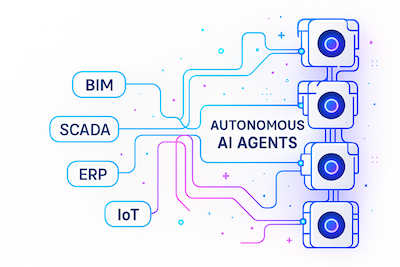
A new era for complex projects
Across construction, infrastructure, and energy, projects are becoming increasingly complex.
Teams face growing pressure to deliver faster, meet sustainability goals, and stay compliant with tightening regulations, all while working across fragmented systems and suppliers.
For many organizations, progress is still slowed down by disconnected models, documents, and manual updates. But a new generation of agentic AI and modular automation is changing that.
These technologies bring intelligence, speed, and reliability to systems engineering workflows, ensuring that design data, specifications, and compliance are always in sync.
This shift is not theoretical. It’s already transforming how forward-thinking organizations design, verify, and operate large-scale systems.
01| From siloed engineering to connected intelligence
For decades, systems engineering has depended on human coordination and static software tools.
Now, agentic AI introduces autonomous, context-aware agents that can understand models, specifications, and changes,and act on them.
Paired with modular automation, organizations can assemble workflows like building blocks: monitoring design changes, validating requirements, and updating documentation dynamically as projects evolve.
This is the foundation of truly synchronous Model-Based Systems Engineering (MBSE) > where every change instantly cascades through the system, maintaining traceability and compliance without manual effort.
Key Benefits:
- Autonomous, context-aware decision-making
- Rapid adaptation to project changes
- Continuous compliance and traceability
- Seamless collaboration across teams and platforms
02| The Model Context Protocol: AI’s “USB-C” moment
The Model Context Protocol (MCP) acts as a universal interface >the “USB-C for AI” < connecting tools and platforms across the digital engineering landscape.
It defines how agents discover resources, exchange data, and maintain context securely across BIM, SCADA, ERP, and IoT environments.
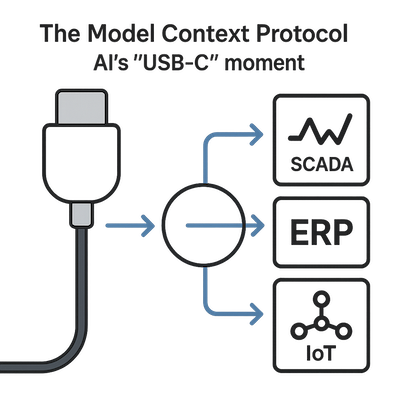
With MCP, organizations can:
- Integrate legacy and cloud-native systems into one connected layer.
- Enforce security, access control, and compliance automatically.
- Eliminate the need for complex, custom-built integrations.
MCP is quickly becoming a backbone for interoperable, intelligent engineering ecosystems, enabling agents like those in Basewise.ai to reason across domains with full context and traceability.
03| Sector-Specific use cases
Contract Traceability in Infrastructure Projects
In large DBFM or design–build contracts, hundreds of system and contract requirements must stay consistent across multiple disciplines. Basewise automatically links client specifications, design models, and verification evidence. When a contract requirement changes, the platform identifies all affected specifications and test cases, instantly showing the impact on compliance, documentation, and supplier deliverables.
Automated Specification Revision for Energy Systems
Energy projects often rely on evolving standards and supplier inputs.
Basewise agents detect updates in referenced documents (for example, a grid code revision or a supplier datasheet) and automatically mark all related requirements for review. Project engineers receive a structured impact report and can approve, reject, or propagate updates across the model in one click, ensuring no outdated specifications remain in the baseline.
Digital Assurance in Construction and InfrastructureAutonomous agents manage With multiple contractors contributing to a complex system (civil, electrical, control systems), Basewise can design AI-agents maintaining a single source of truth for requirements and verification. The system continuously checks that every requirement is testable, linked to design evidence, and backed by verification results, providing real-time compliance dashboards for both client and contractor.
Change Impact & Communication to Stakeholders
When an engineering change or safety constraint affects downstream systems, AI-agents not only identifies the impacted components but also generates an automated communication summary for suppliers and reviewers. This ensures consistent understanding across teams and prevents uncoordinated design changes that often lead to rework or non-compliance findings.
04| From compliance burden to intelligent assurance
In most engineering organizations, compliance and traceability still mean spreadsheets, versioned PDFs, and manual cross-checks.
Every requirement change or design update can ripple across safety cases, supplier contracts, and verification reports and keeping everything aligned is a constant struggle.
Basewise.ai changes this by embedding agentic AI directly within systems engineering workflows.
It creates a living, intelligent layer of assurance that continuously monitors, validates, and synchronizes data across your engineering ecosystem.
This turns V&V and compliance from a reactive task into a proactive, AI-driven capability that continuously strengthens project integrity.
05| Actionable strategies for leaders
06| Turning Vision Into Action
The shift to modular, intelligent systems isn’t just a technological upgrade, it’s a strategic transformation.
Those who act early will not only streamline operations but also set new standards for transparency, safety, and efficiency across industries.

AI-Powered Modular Digital Twins: Transforming Systems Engineering in Construction, Infrastructure, and Energy
The AI Energy Crunch explained
-1.png)